































Help your friend embrace their journey with hope, guide them through their sorrow and provide immediate relief with our comforting, healing, and inspiring Discover Hope - Care Package.

Guide your loved one to a deeper connection with their healing process. The Experience Hope - Care Package offers comfort, personal growth, and the strength to move forward.
Empower your friend to rebuild resilience and foster connections during tough times. The Restore Hope - Care Package ensures continuous support, emotional ease, and inspirational upliftment.
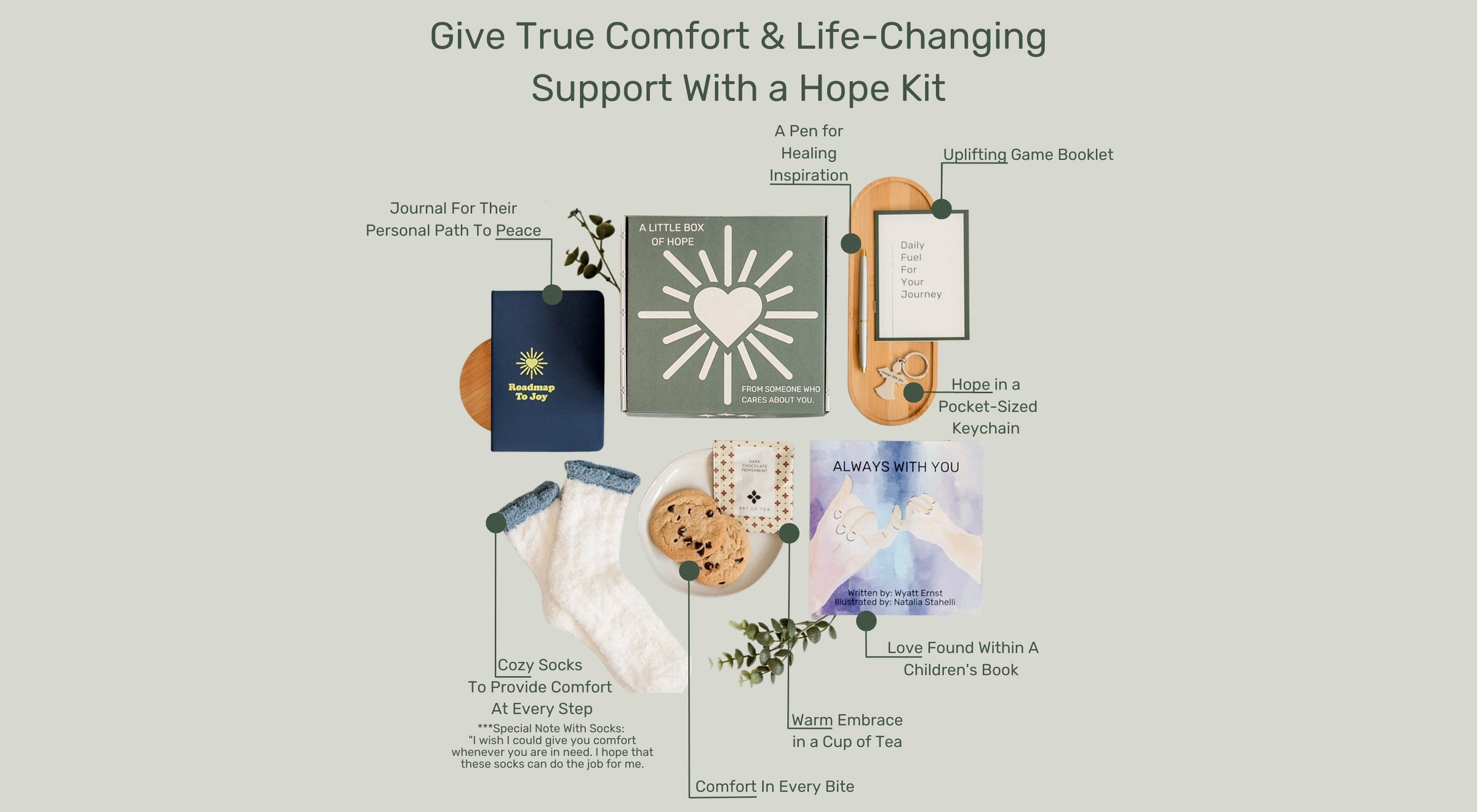
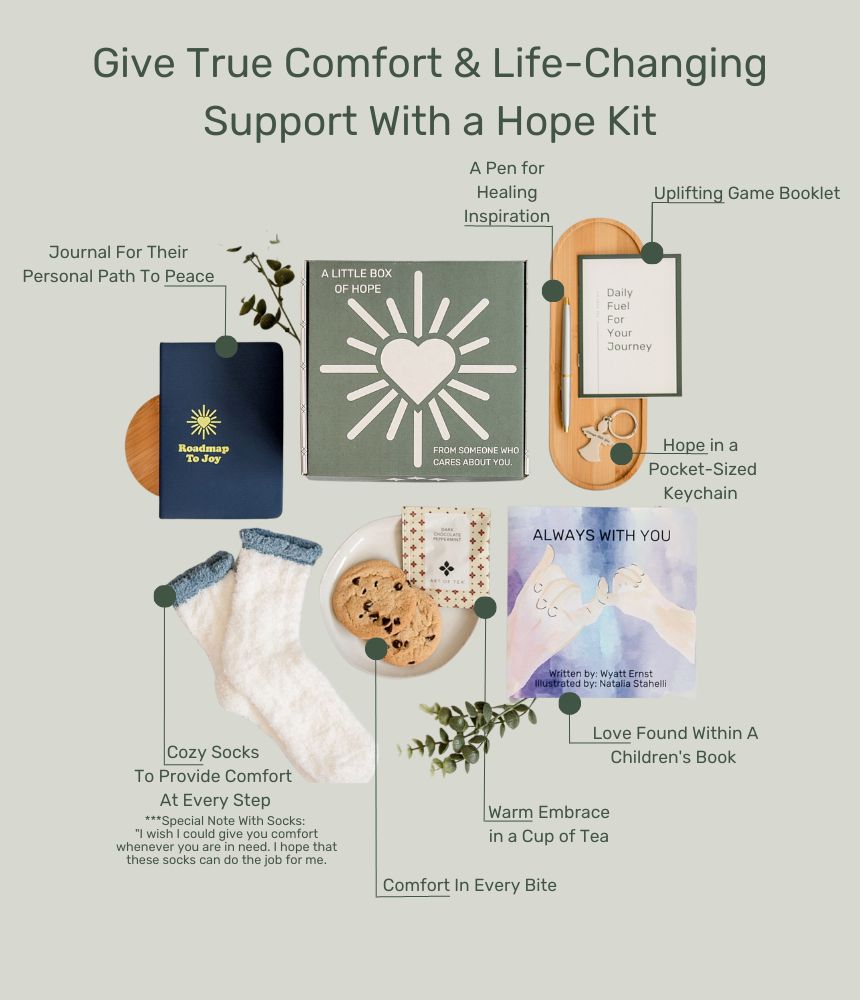
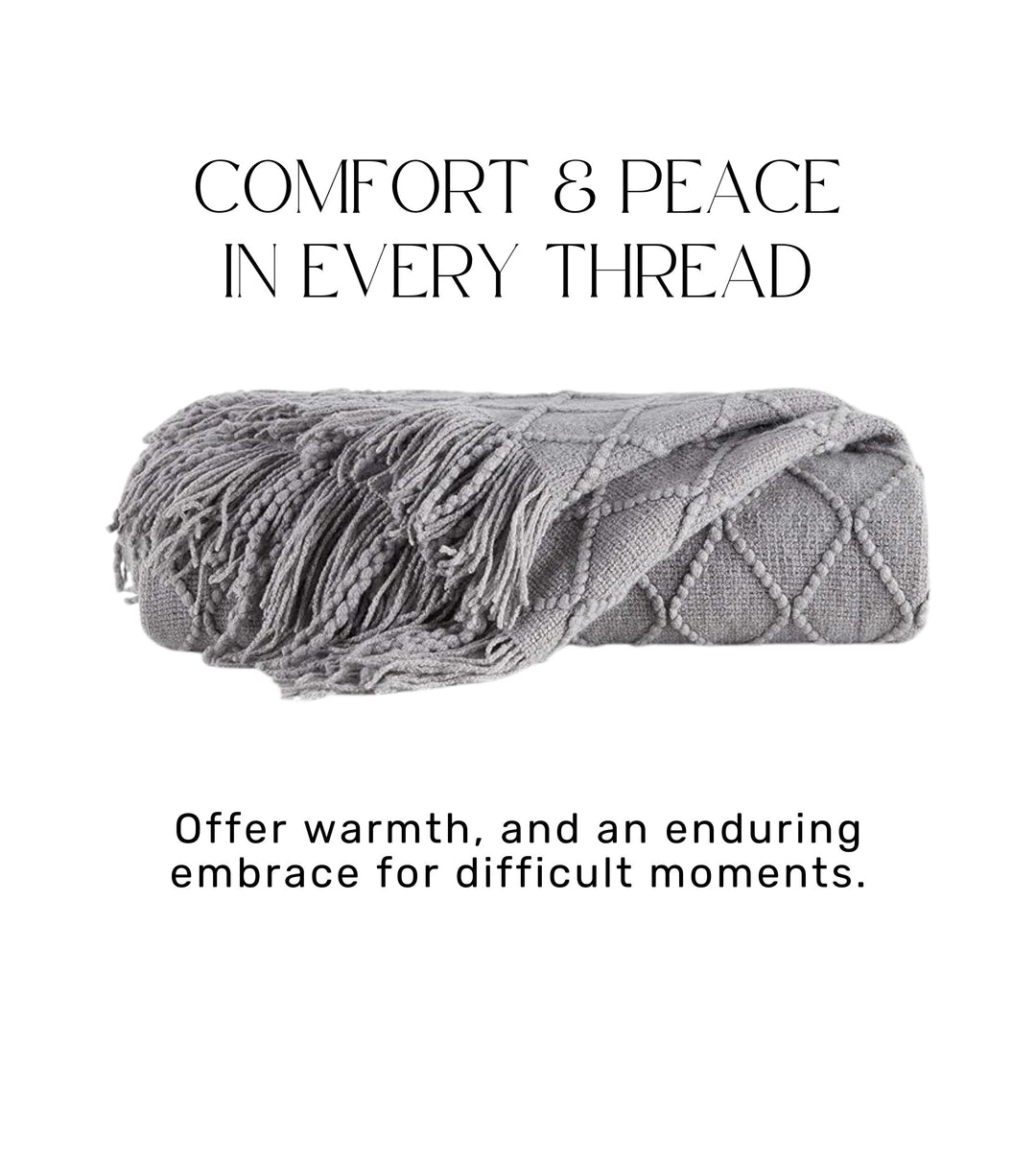
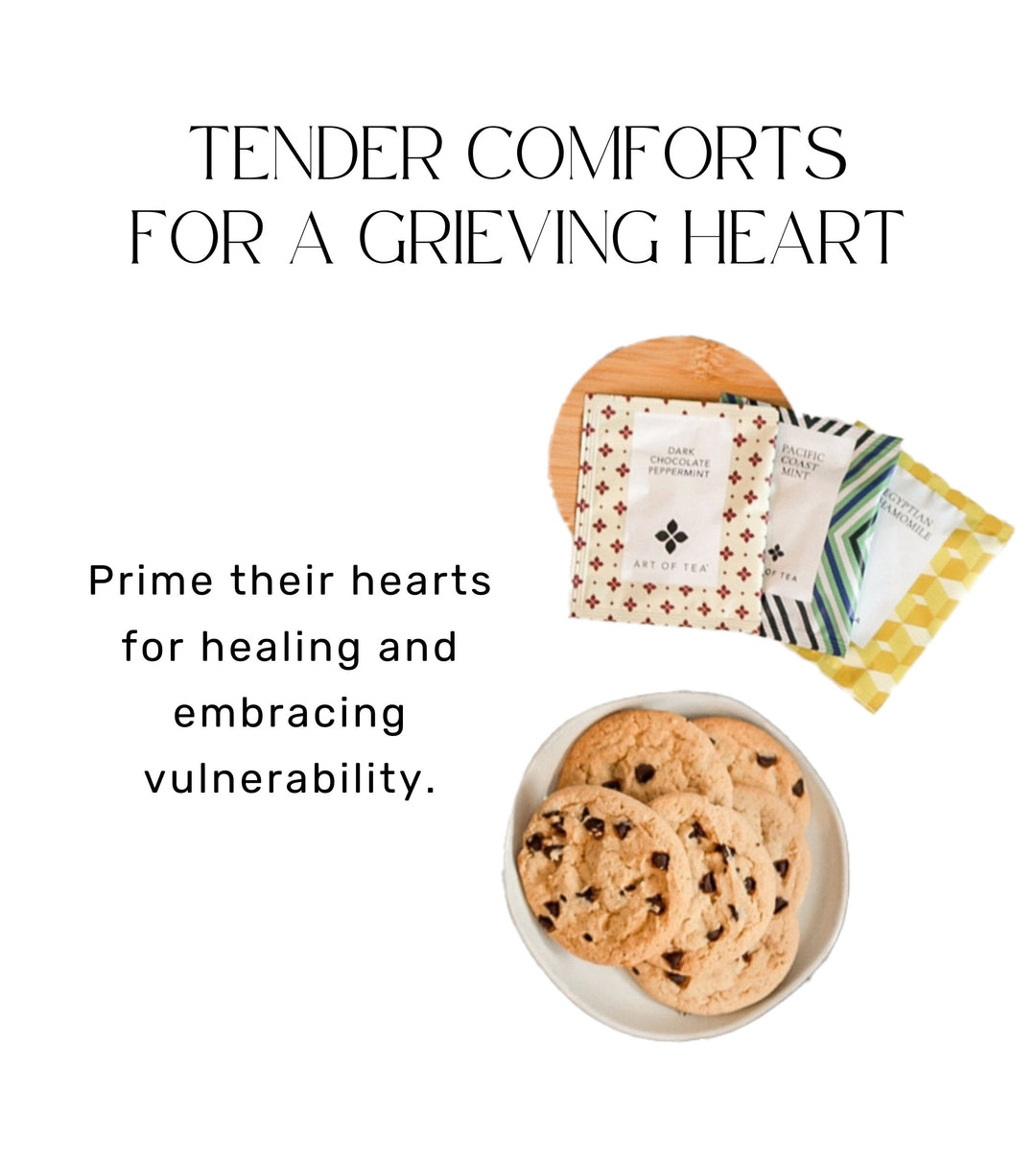
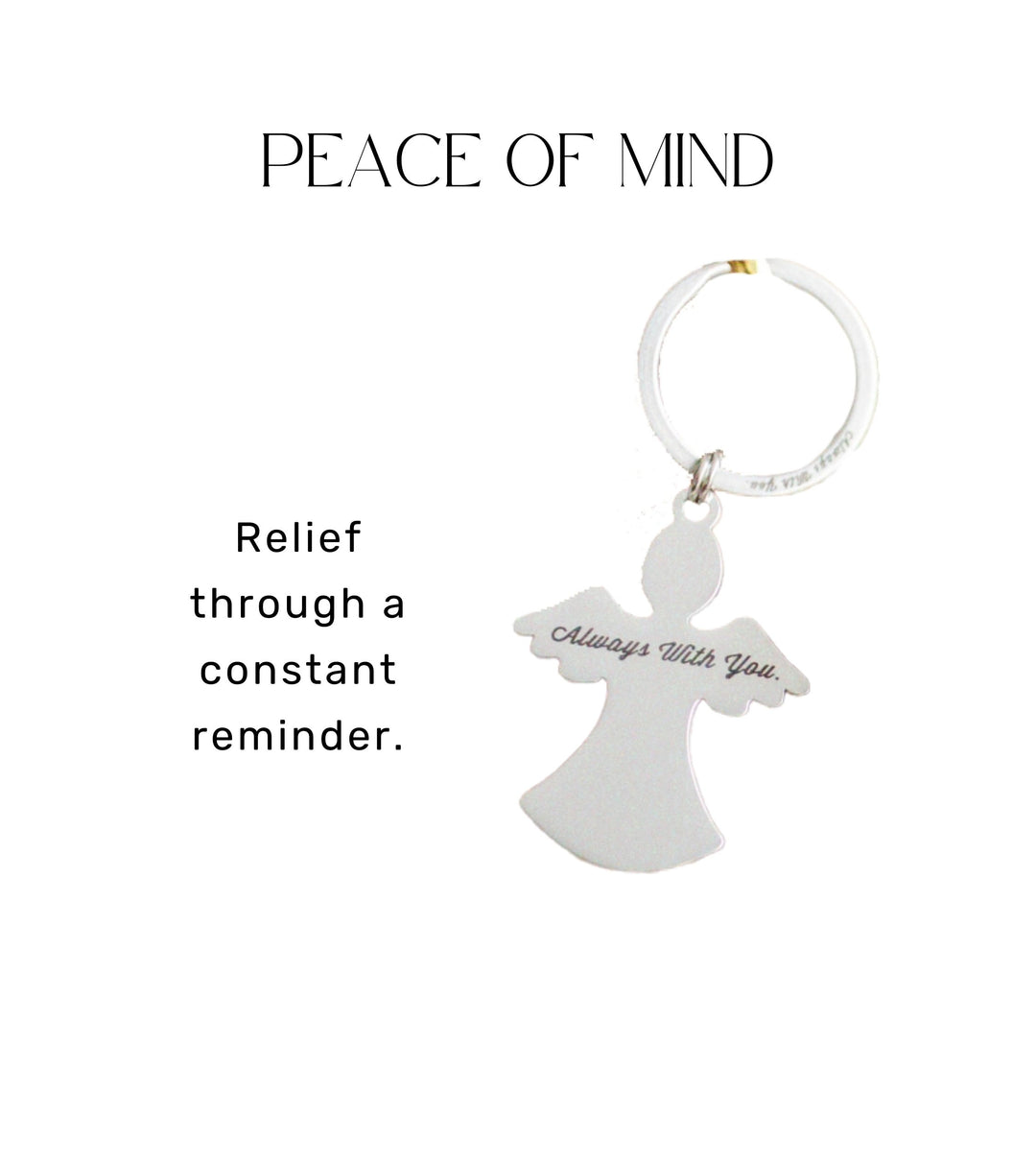
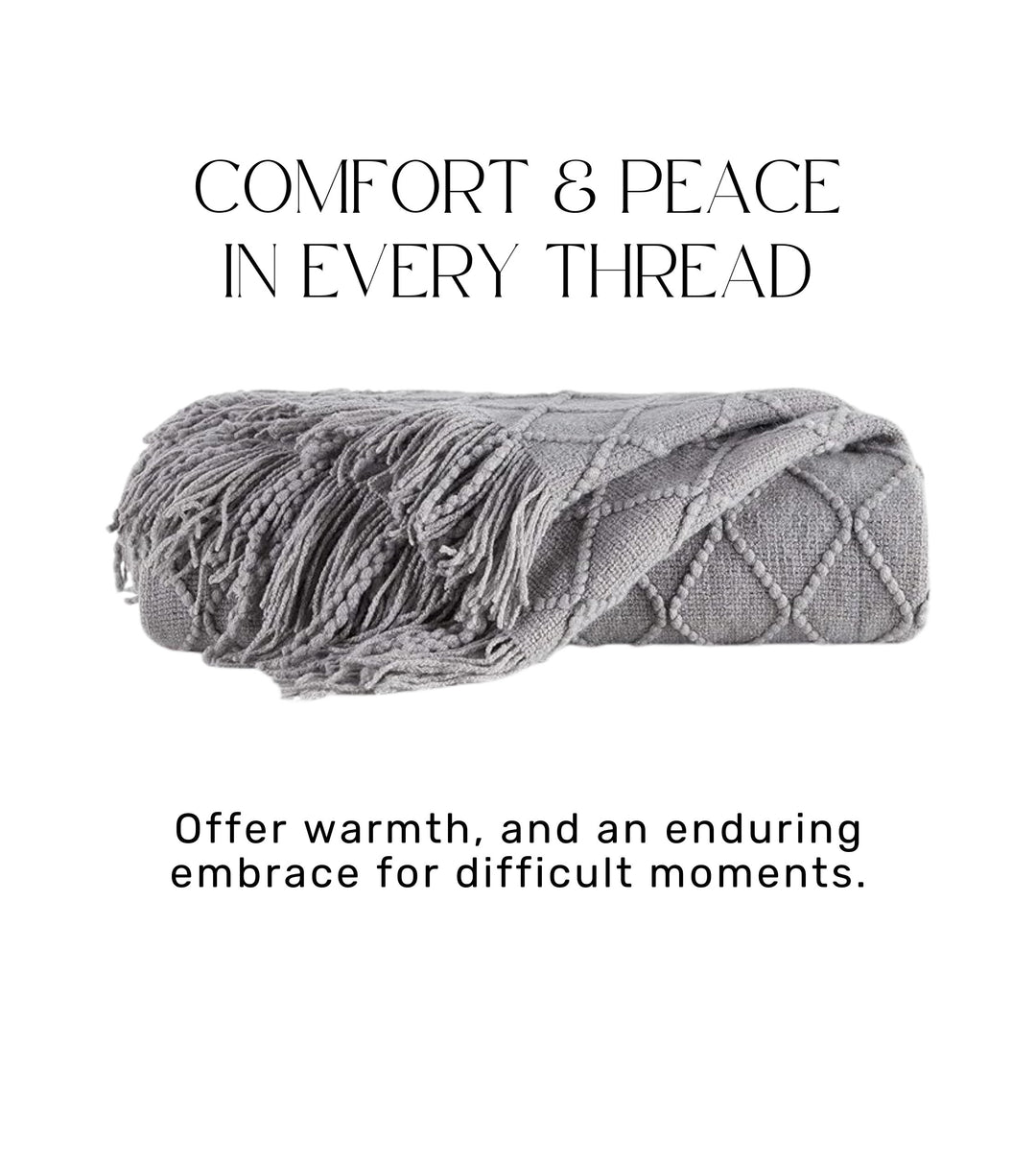
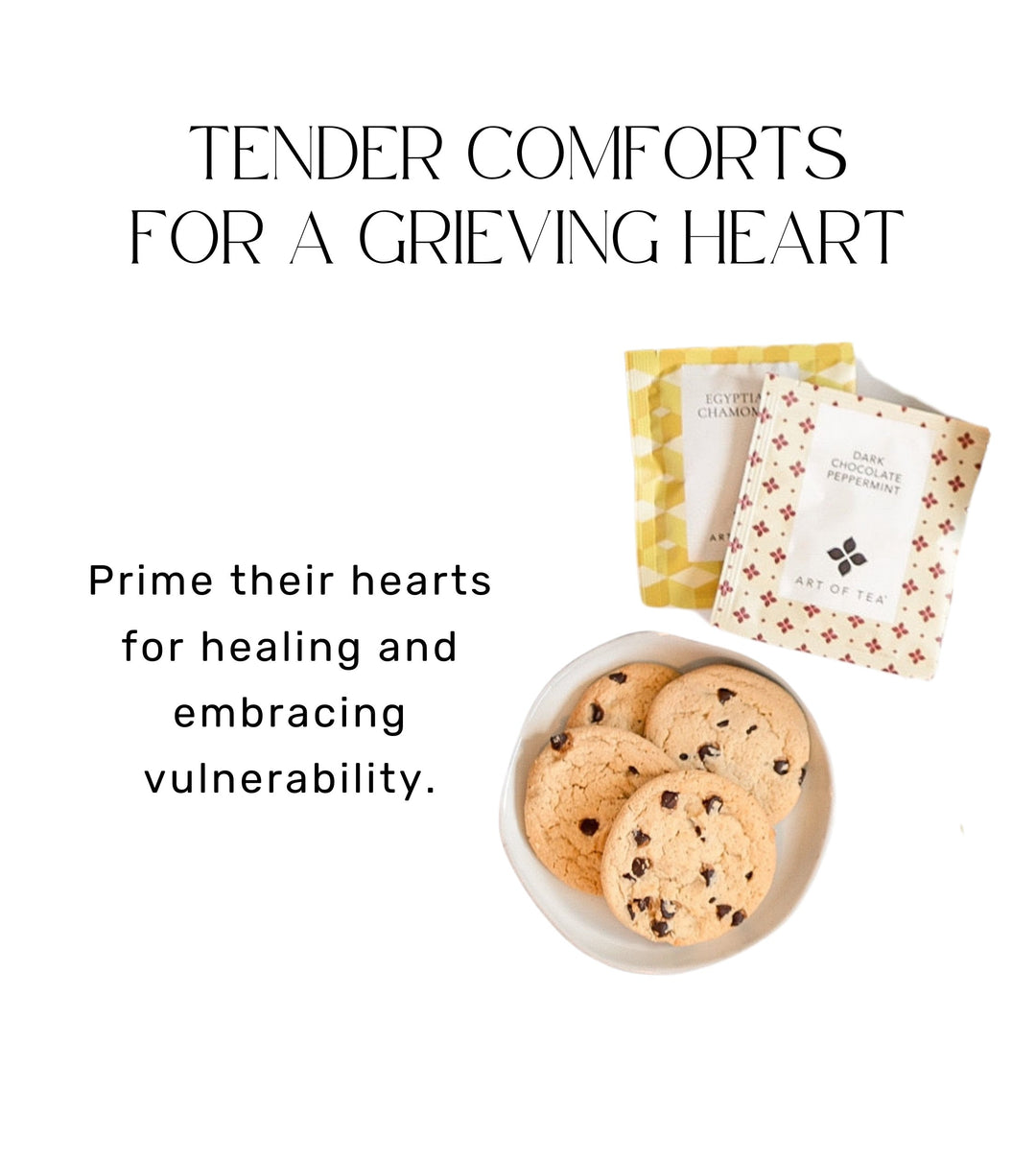
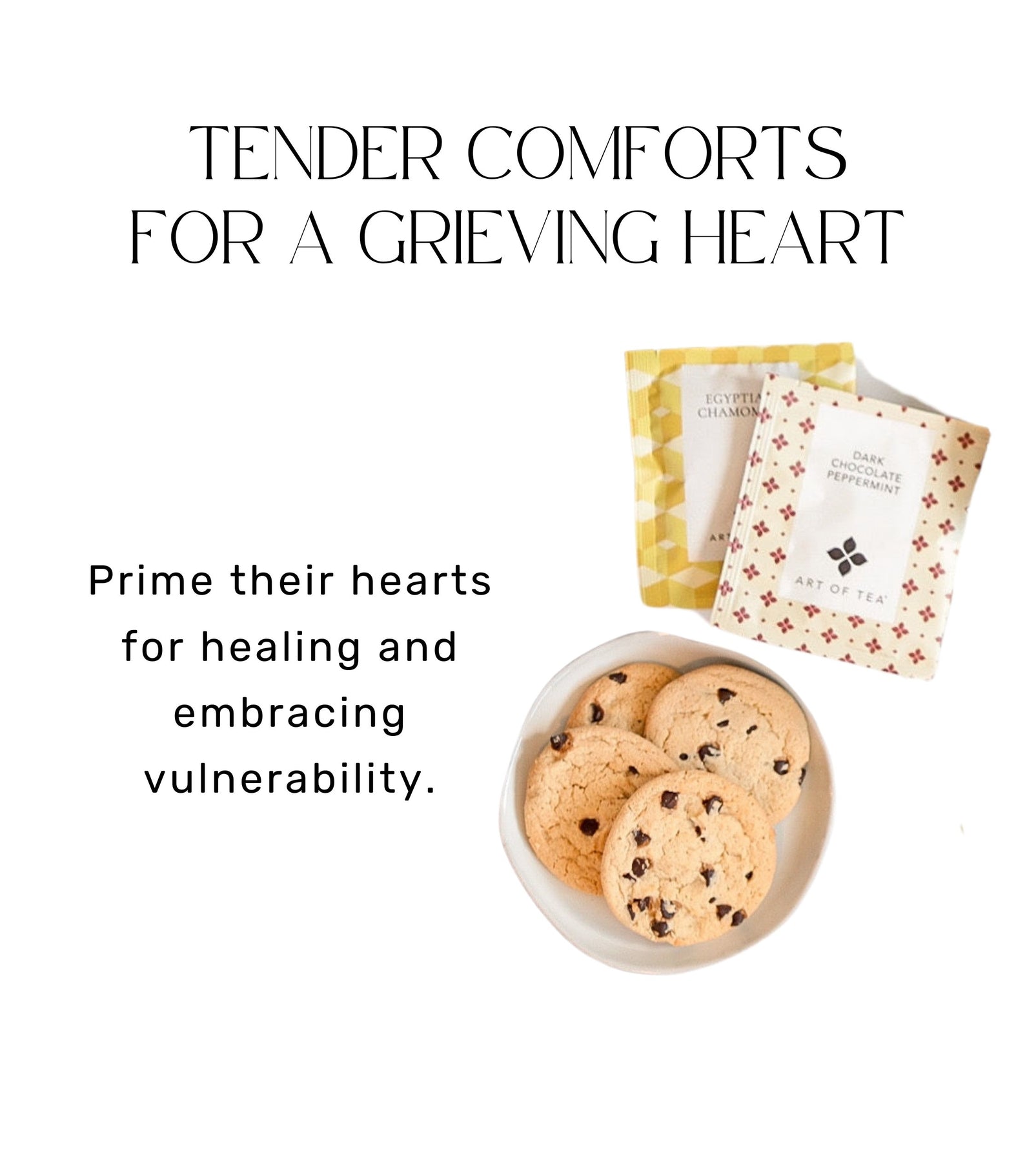
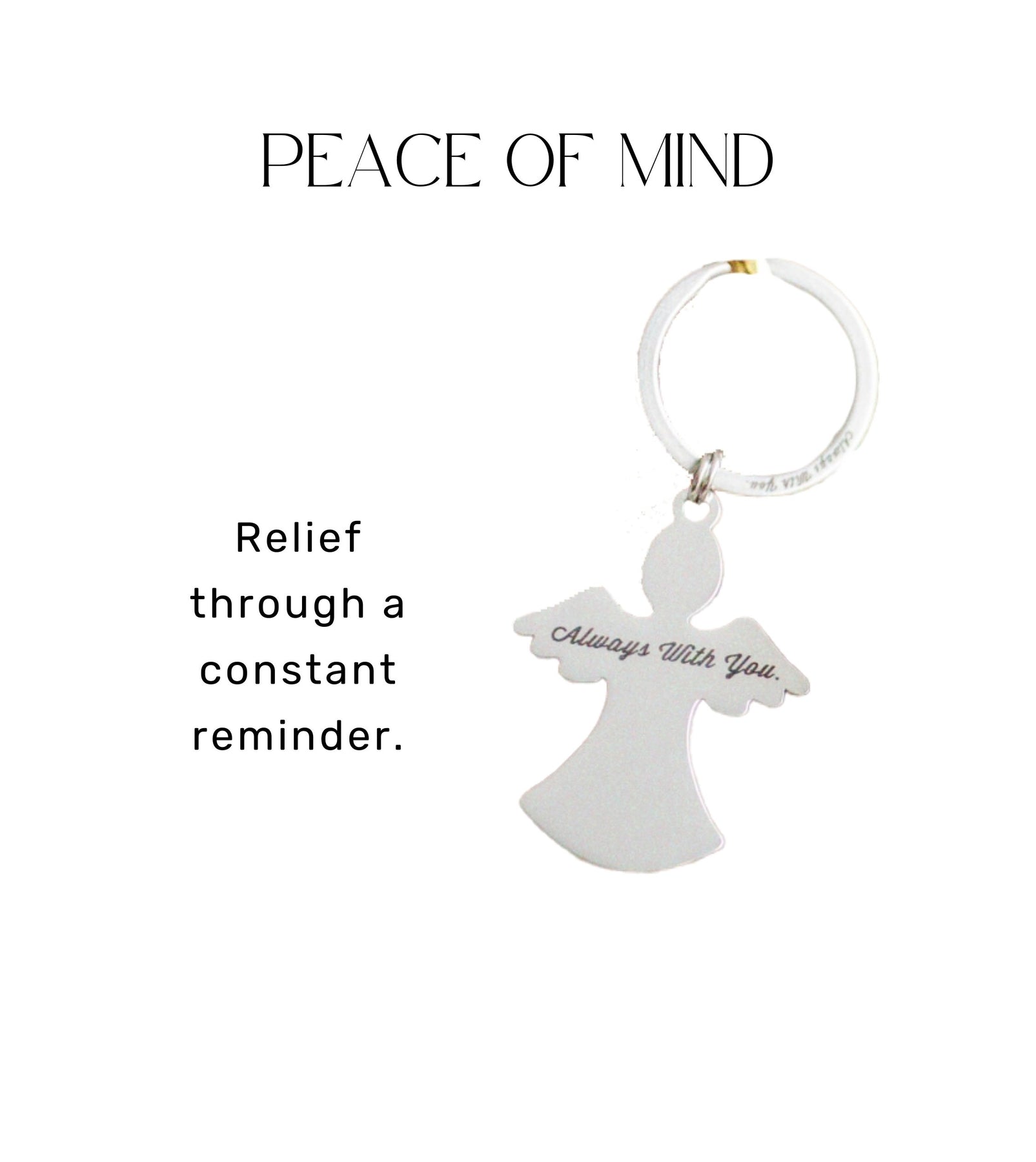
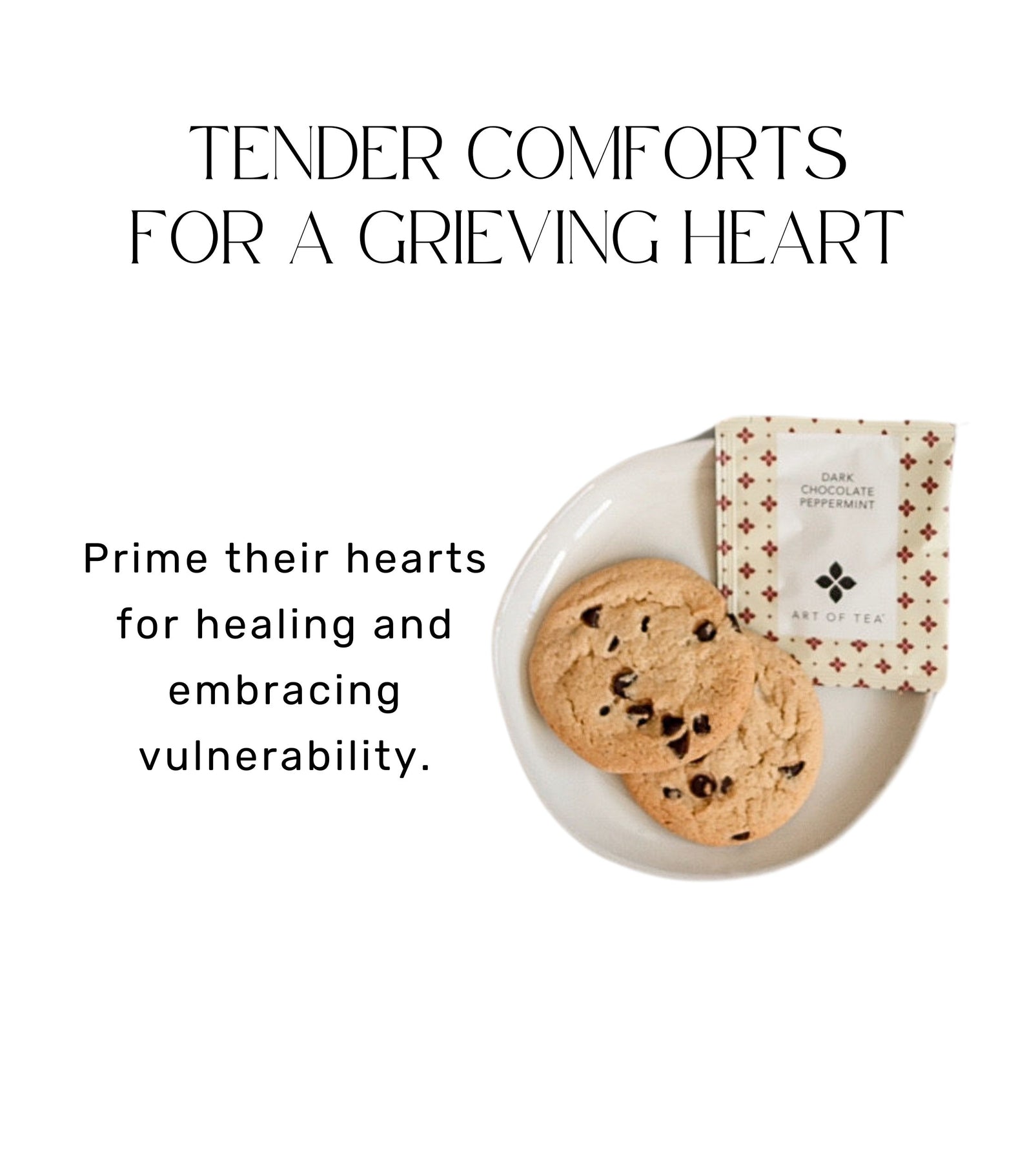
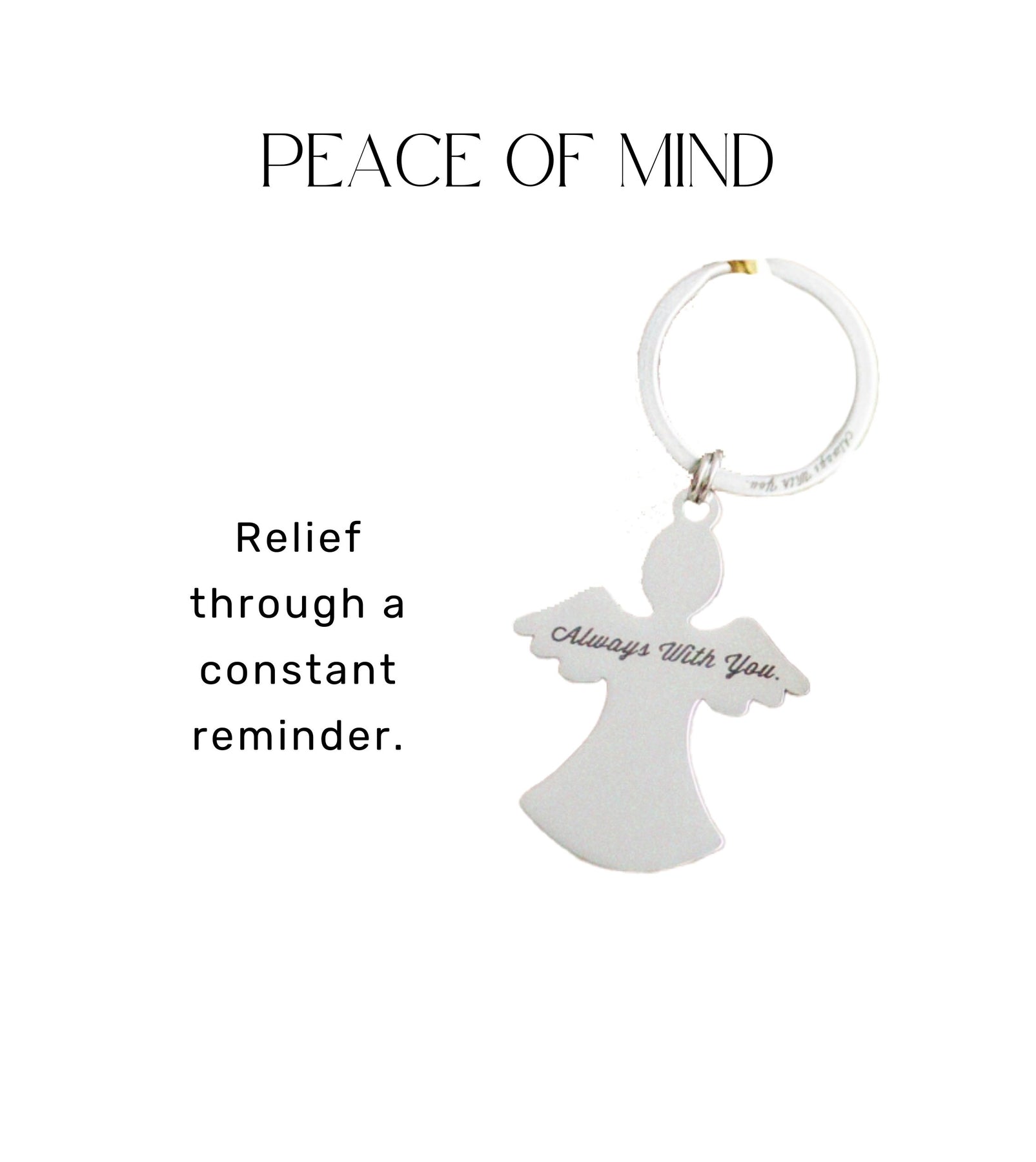
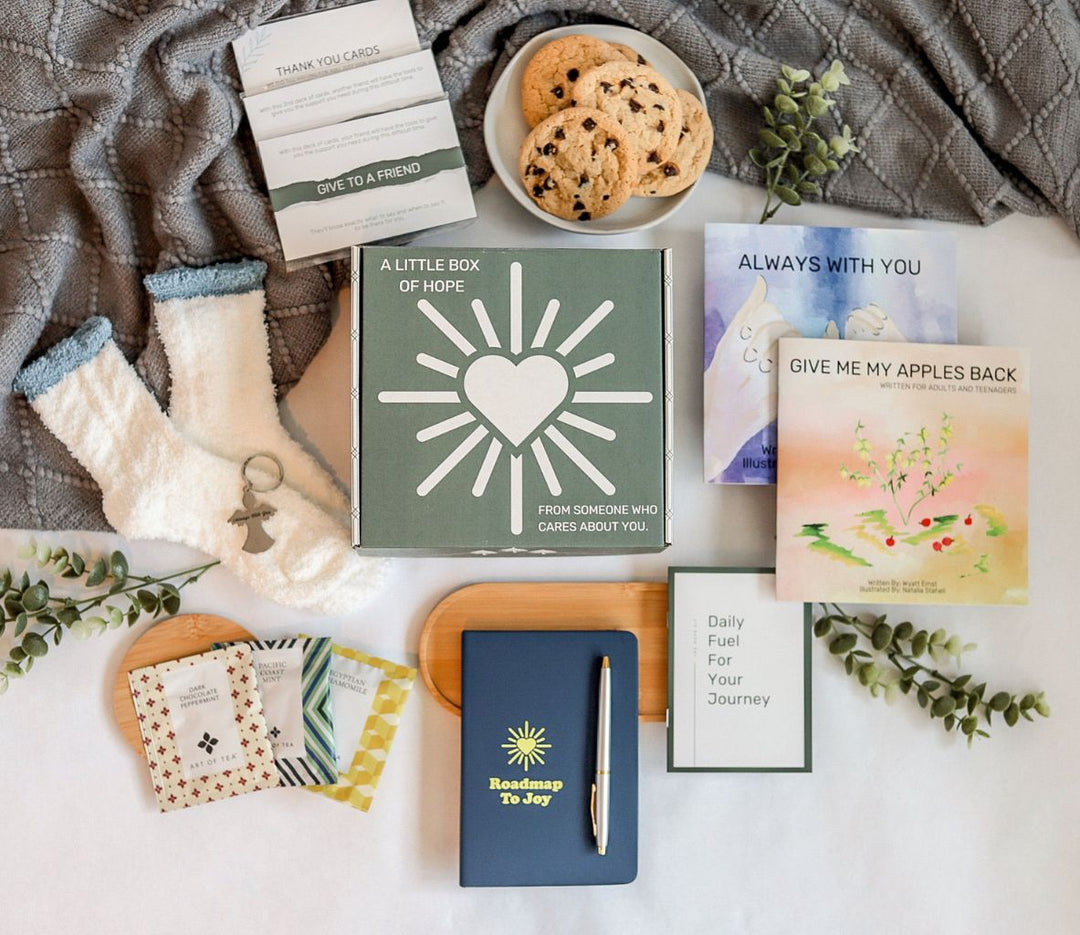
Our Sympathy Gift Basket is thoughtfully assembled to embrace the heart during hard times. Each comforting component wraps your friend in understanding and hope, gently supporting every step of their healing path.


The Sympathy Gift Basket's soothing elements meet your friend where they are, offering a hand to hold and a beacon of hope in their uniquely personal journey through grief.
The Sympathy Gift Basket serves as a gentle companion in your friends darkest hours. It fosters resilience, promotes emotional expression, and encourages the rebuilding of connections, illuminating the path to healing and recovery.


Help your friend embrace their journey with hope, guide them through their sorrow and provide immediate relief with our comforting, healing, and inspiring Discover Hope - Gift Basket.
Guide your loved one to a deeper connection with their healing process. The Experience Hope - Gift Basket offers comfort, personal growth, and the strength to move forward.
Empower your friend to rebuild resilience and foster connections during tough times. The Restore Hope - Gift Basket ensures continuous support, emotional ease, and inspirational upliftment.

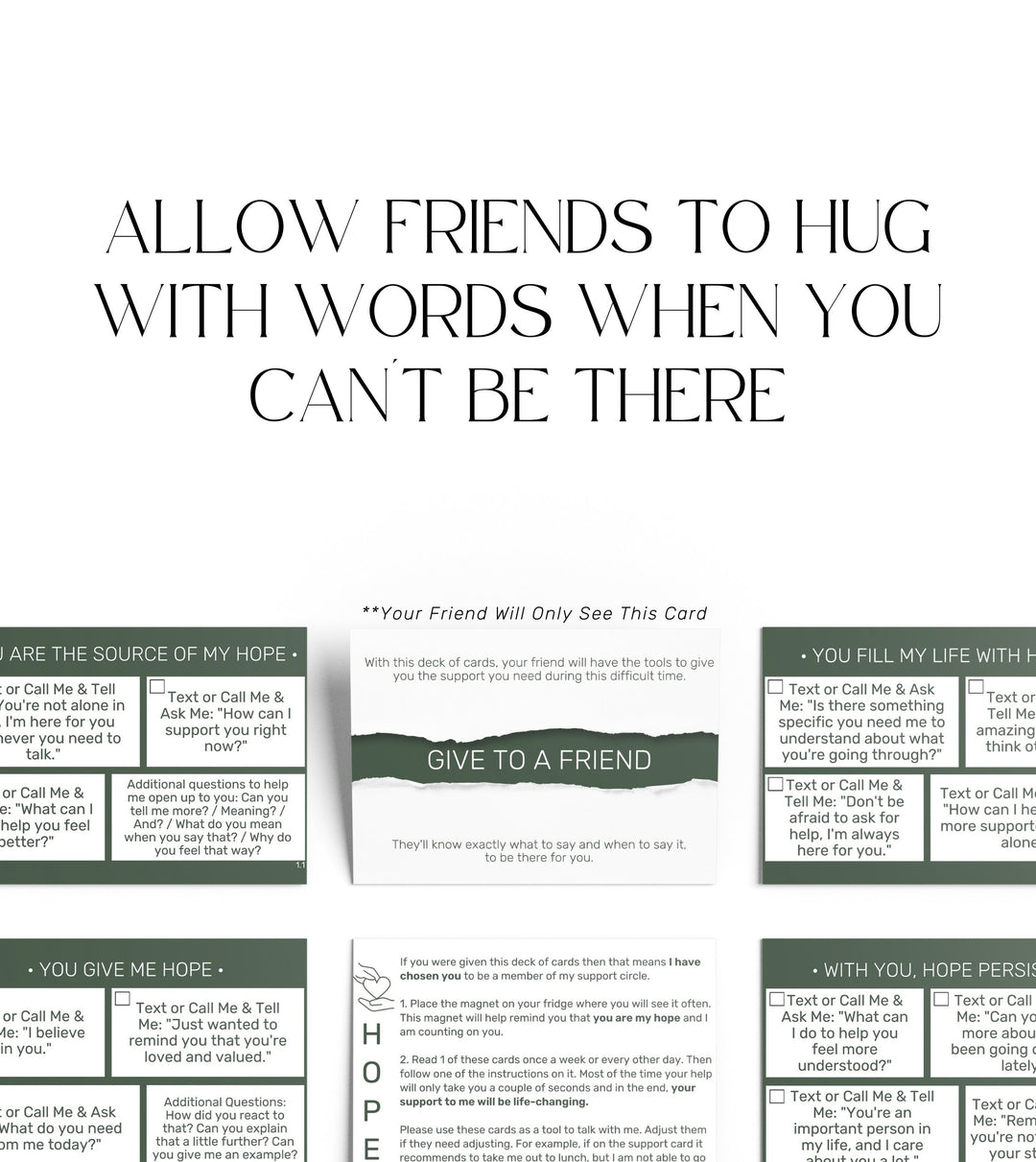
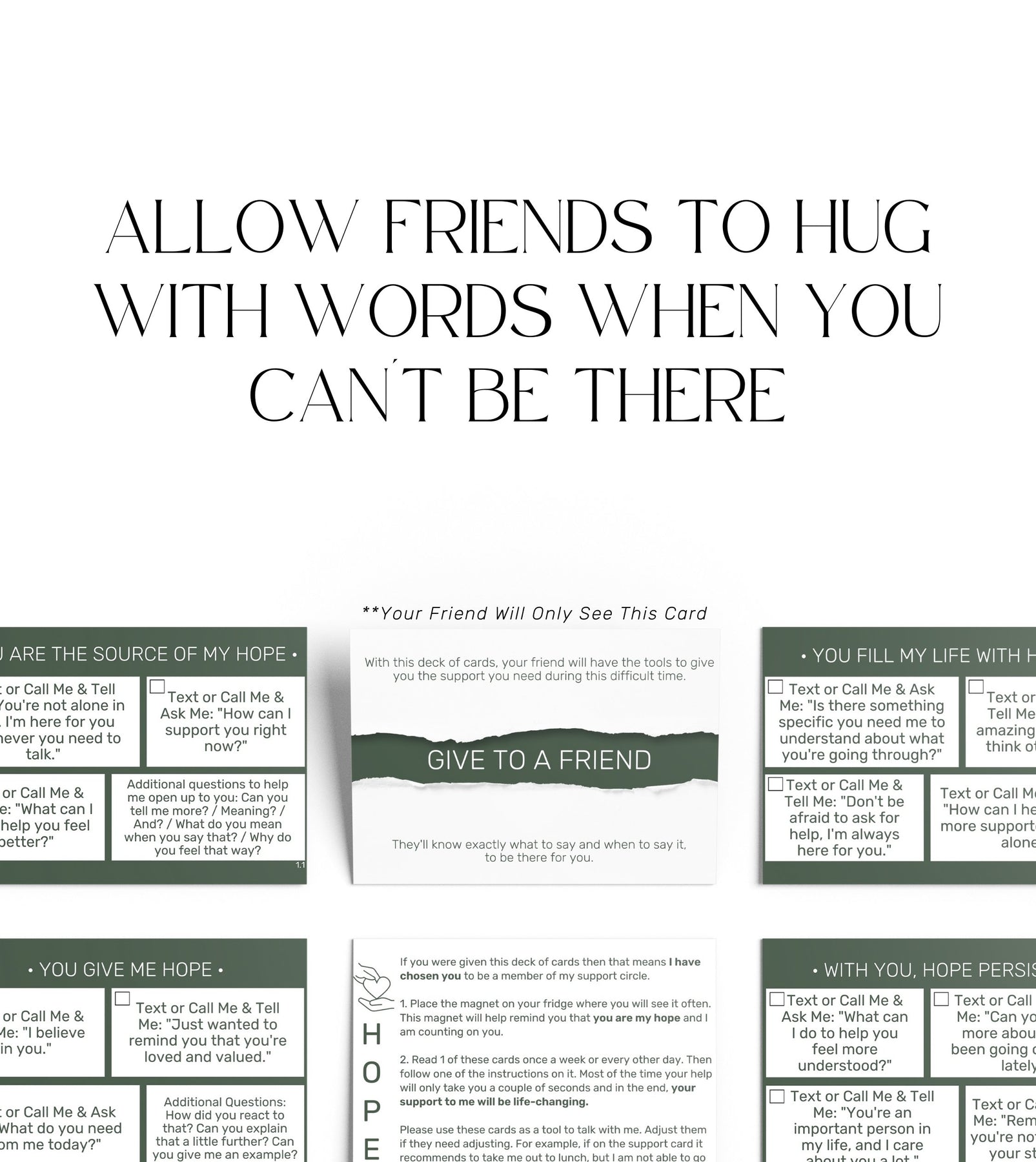
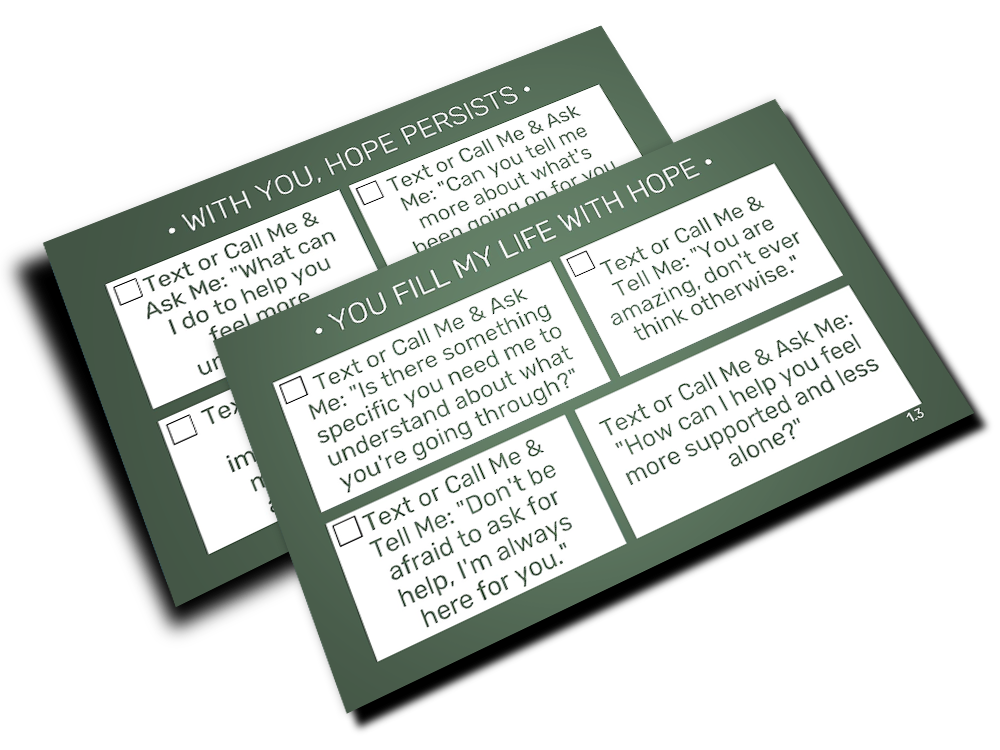
Bridge the gap of understanding with our Support Cards. The cards will provide your loved one's friends with compassionate guidance on how to offer effective support, transforming good intentions into healing connections during difficult times.
*Patent Pending On Support Cards.
Provide a gentle roadmap for your loved one's healing. The Grief Schedule fosters connection and resilience, empowering them to claim small victories each day, providing comfort amidst adversity.


Enable your loved one to express appreciation without stress. Our prewritten Thank You Cards in the Gift Basket let them reconnect with their support network, easily affirming invaluable relationships during grief.
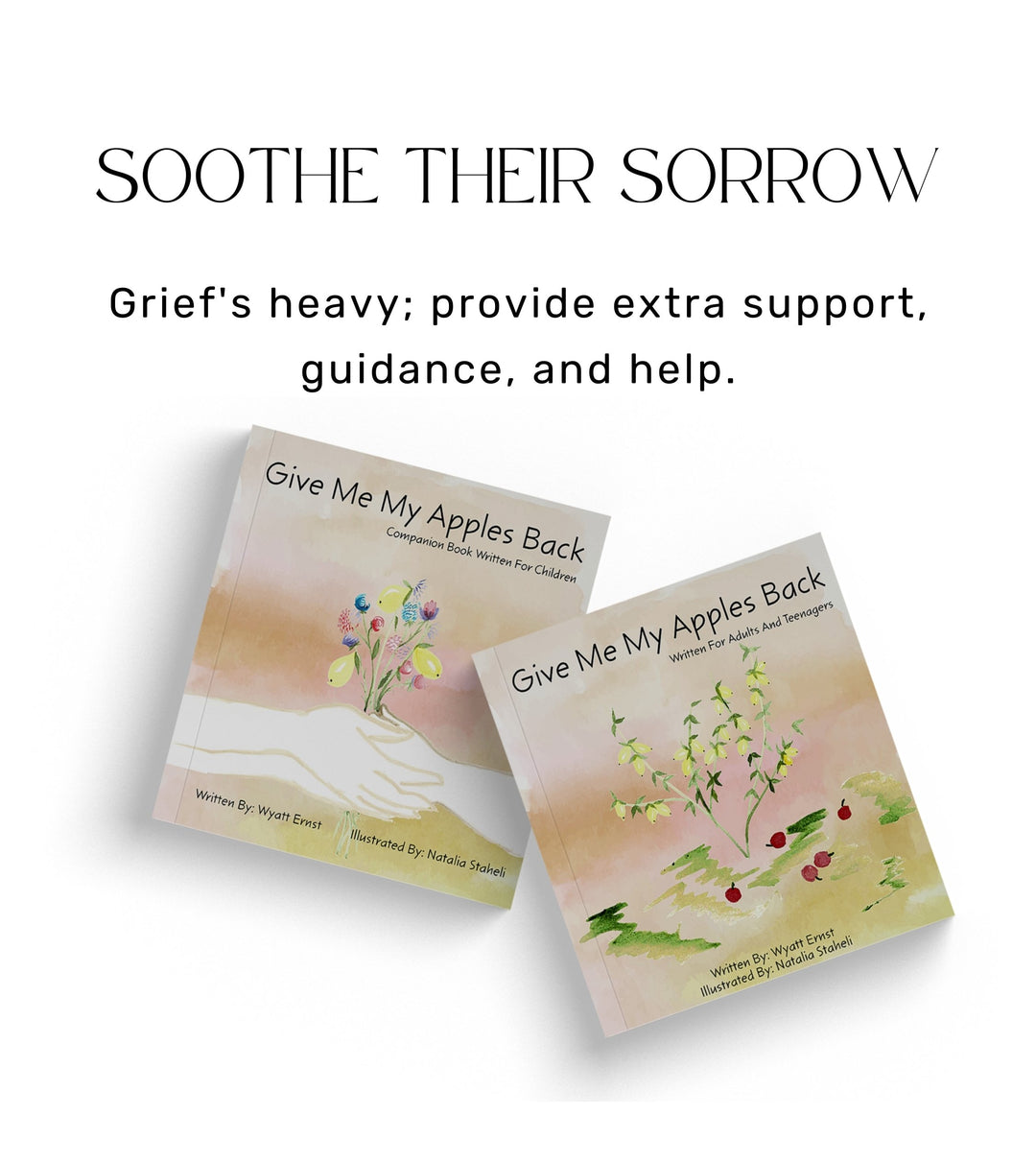
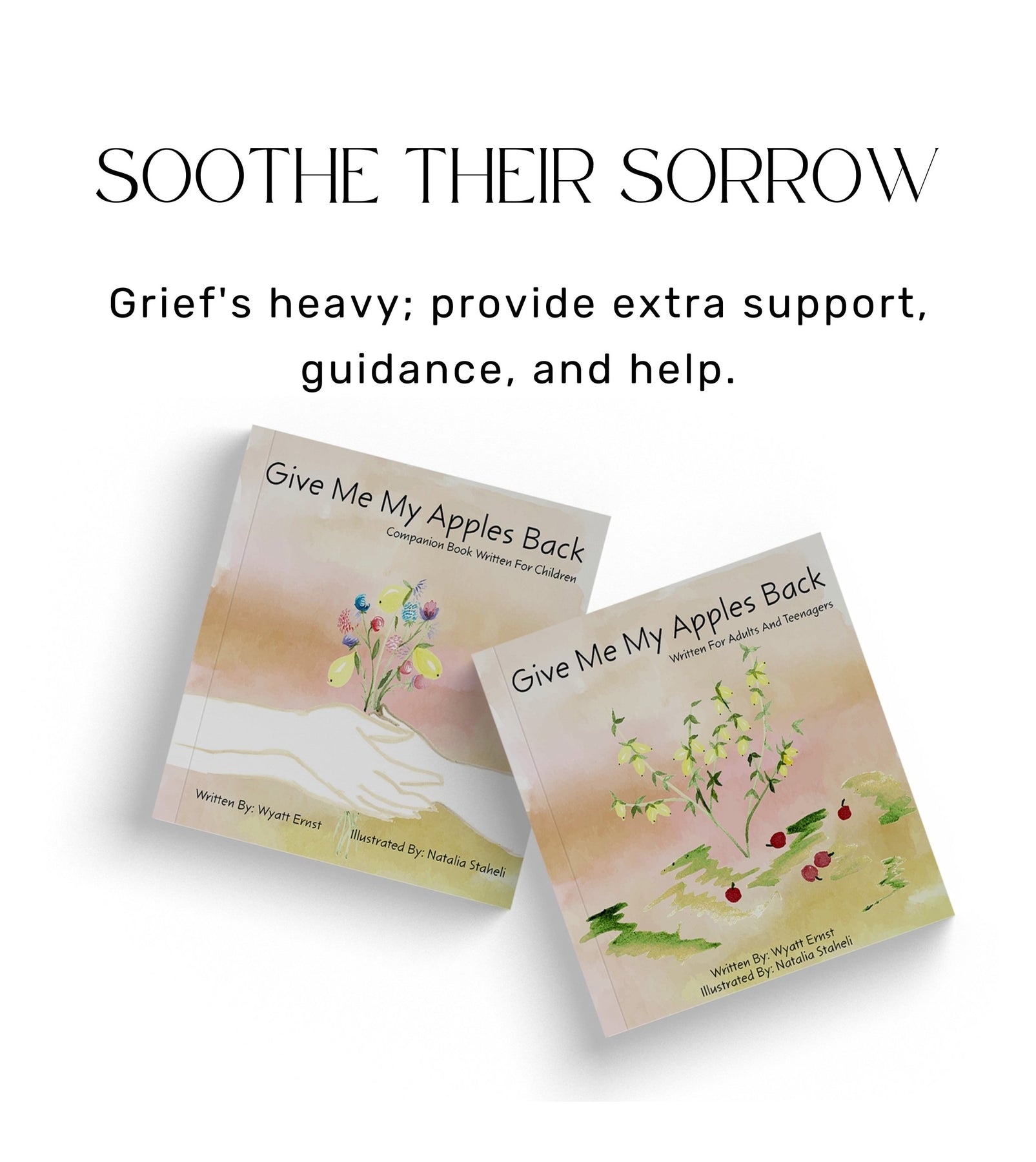
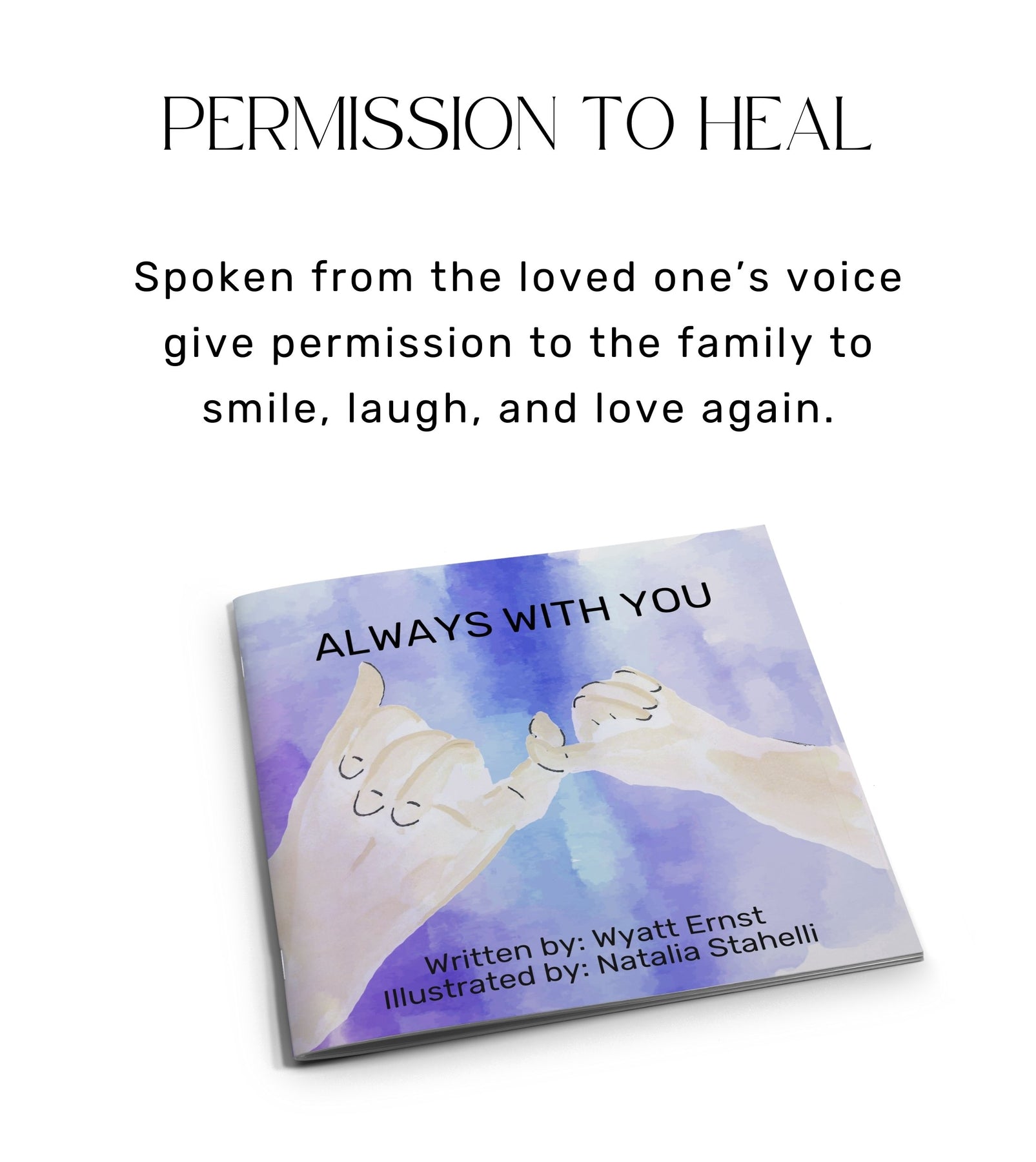
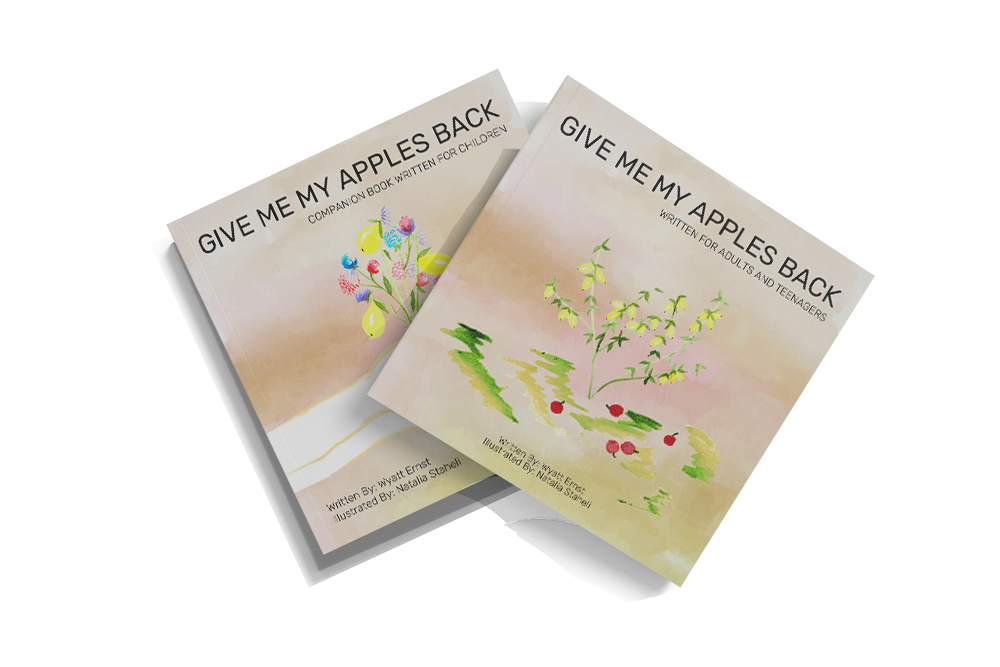
Equip your loved one with strength through 'Give Me My Apples Back' books. These transformational stories, offer lessons of resilience, inspiring both children and adults during challenging times.
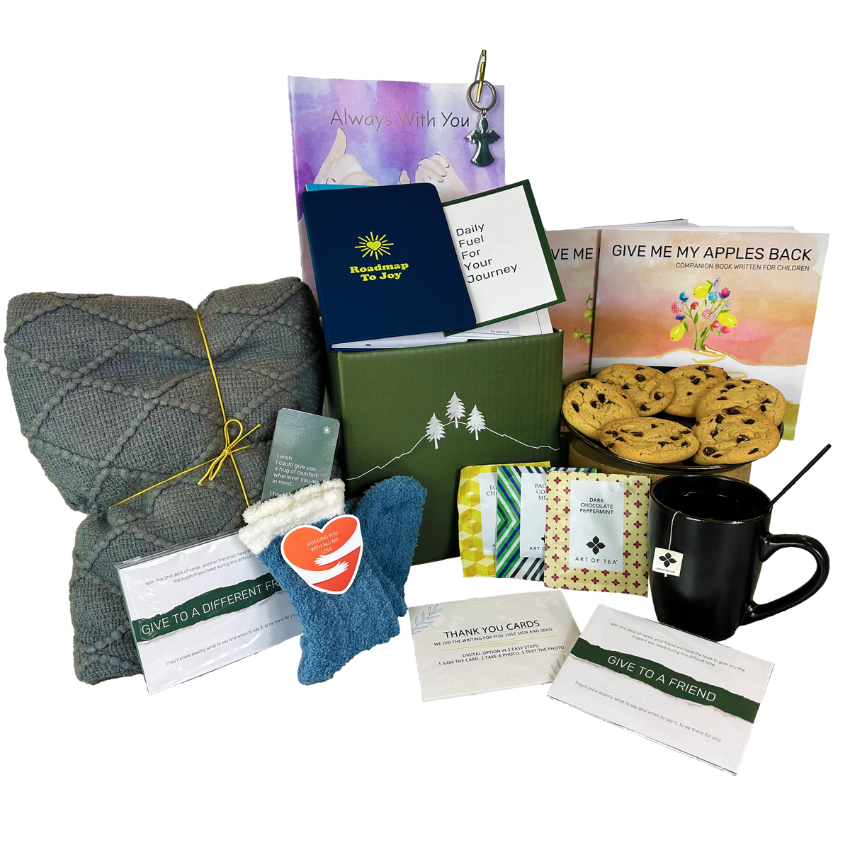
The Sympathy Gift Basket is designed for anyone navigating through grief. It offers tools for healing, comfort, and self-expression, making it a thoughtful gift for anyone experiencing loss.
Absolutely! You can have the Sympathy Gift Basket sent directly to your loved one's address. Our team ensures that it arrives with utmost care and discretion.
Of course! During checkout there is a designated message box to place your personalized message.
The Sympathy Gift Basket is designed to provide long-term comfort, so it's appropriate anytime after a loss. It's especially helpful at the funeral or once the initial shock has passed and the ongoing process of healing begins.
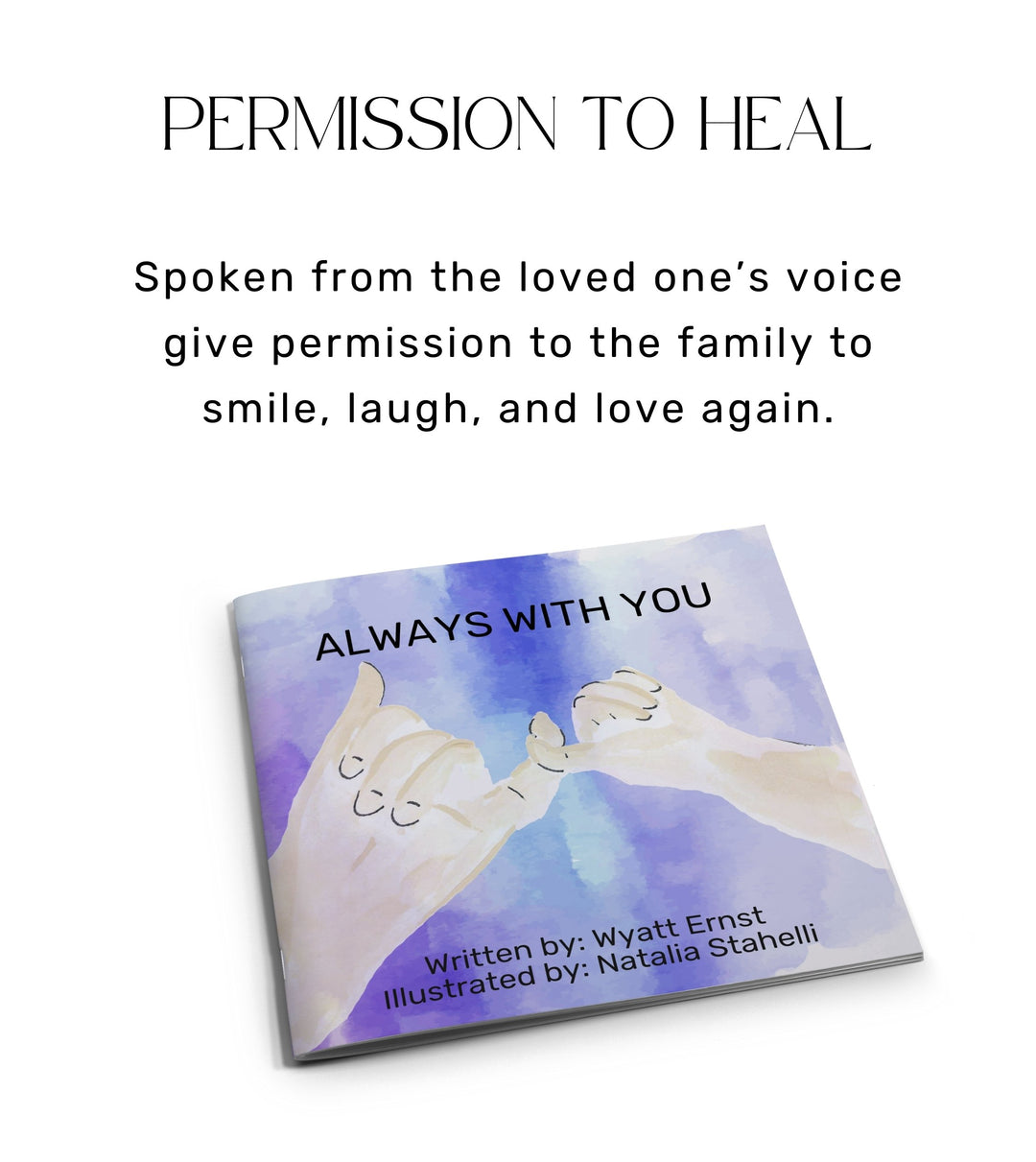
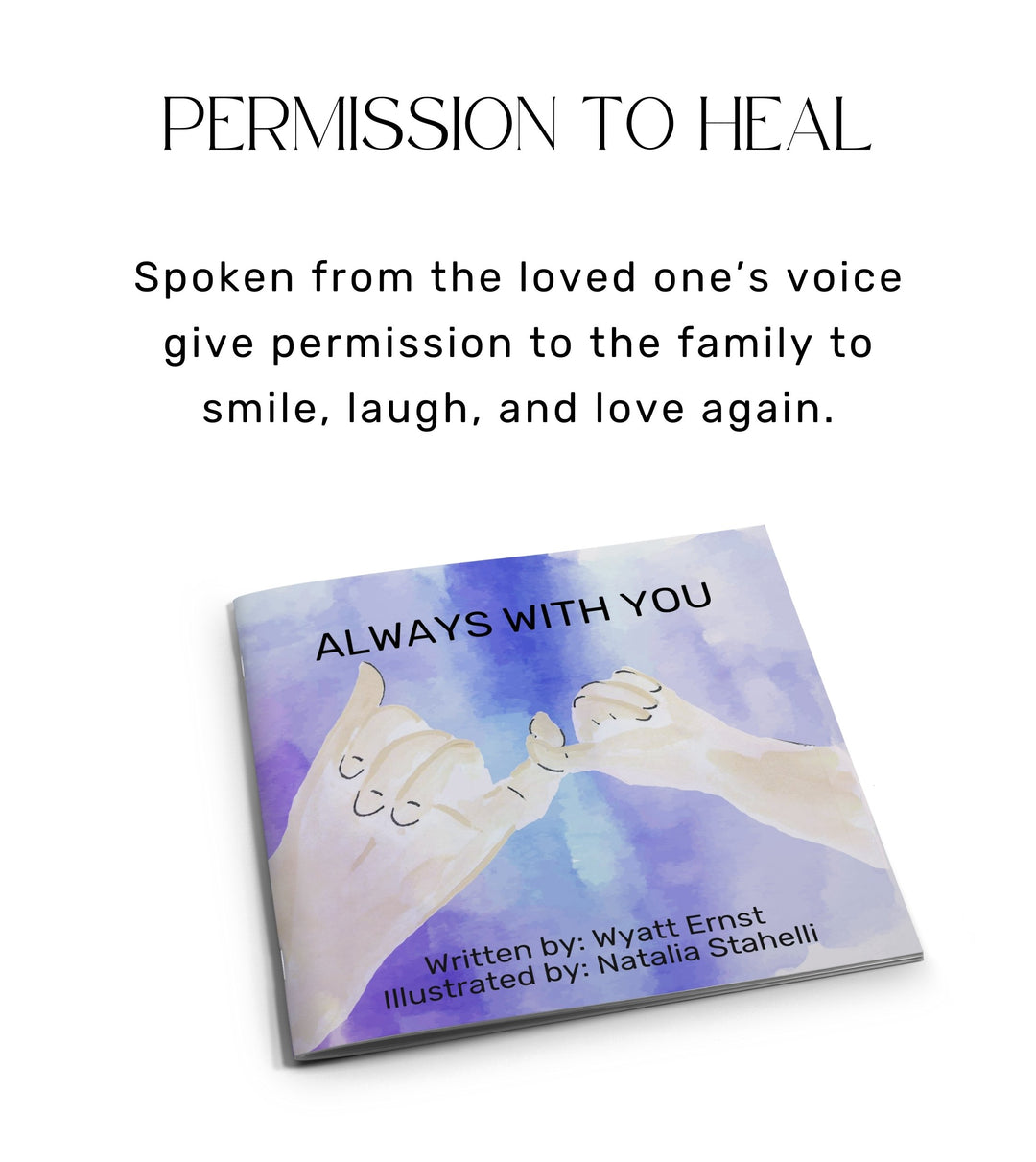
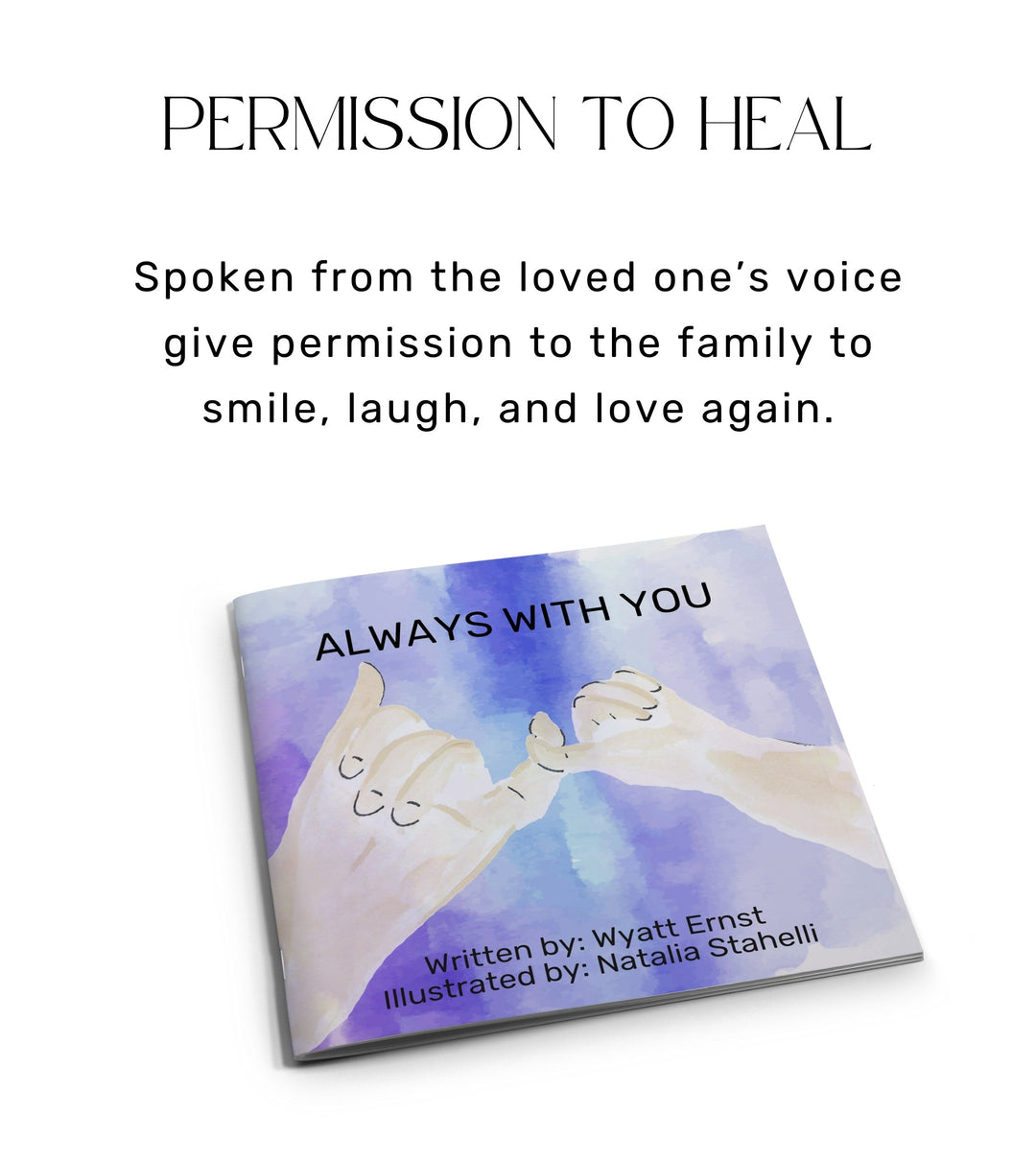
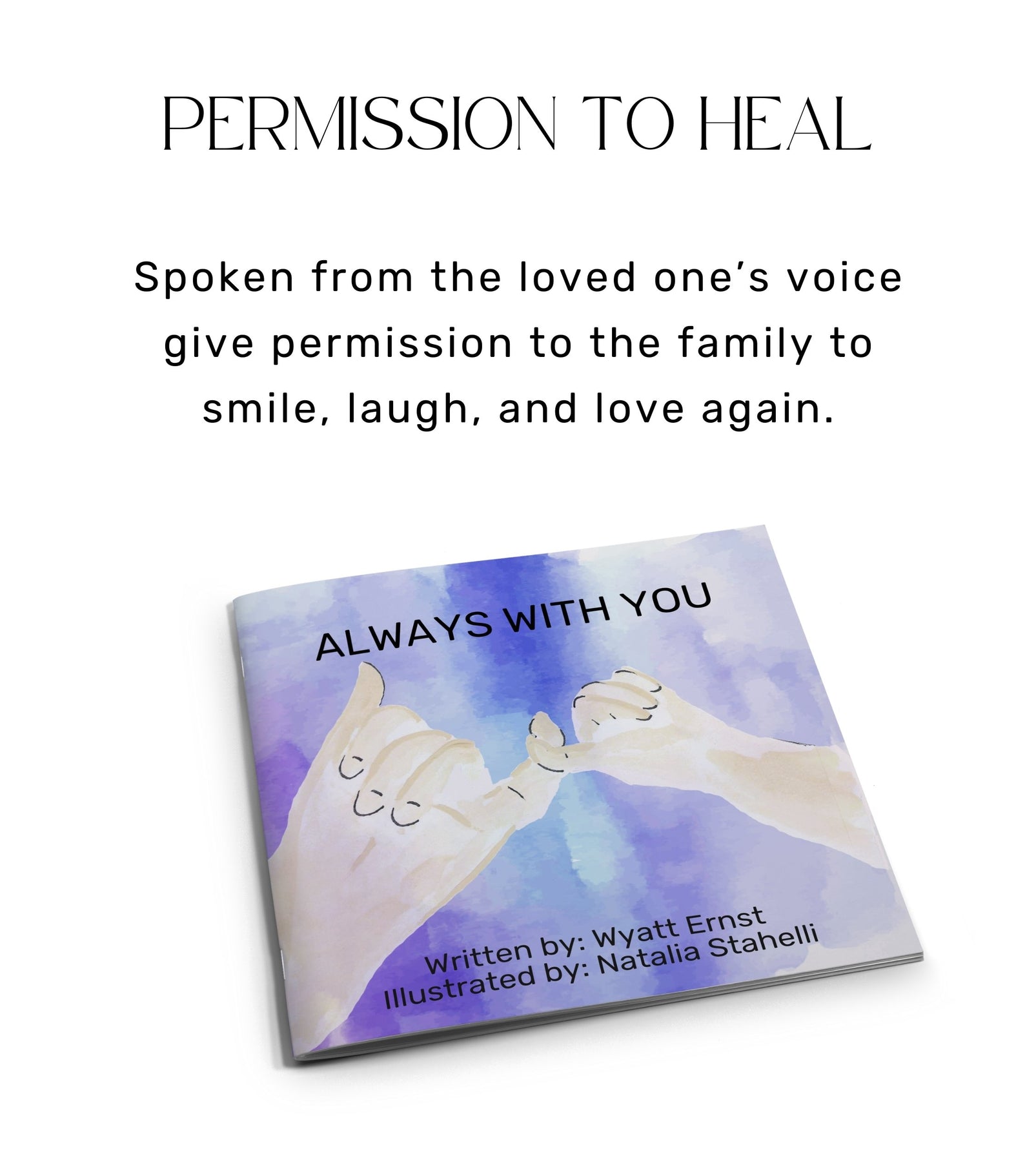
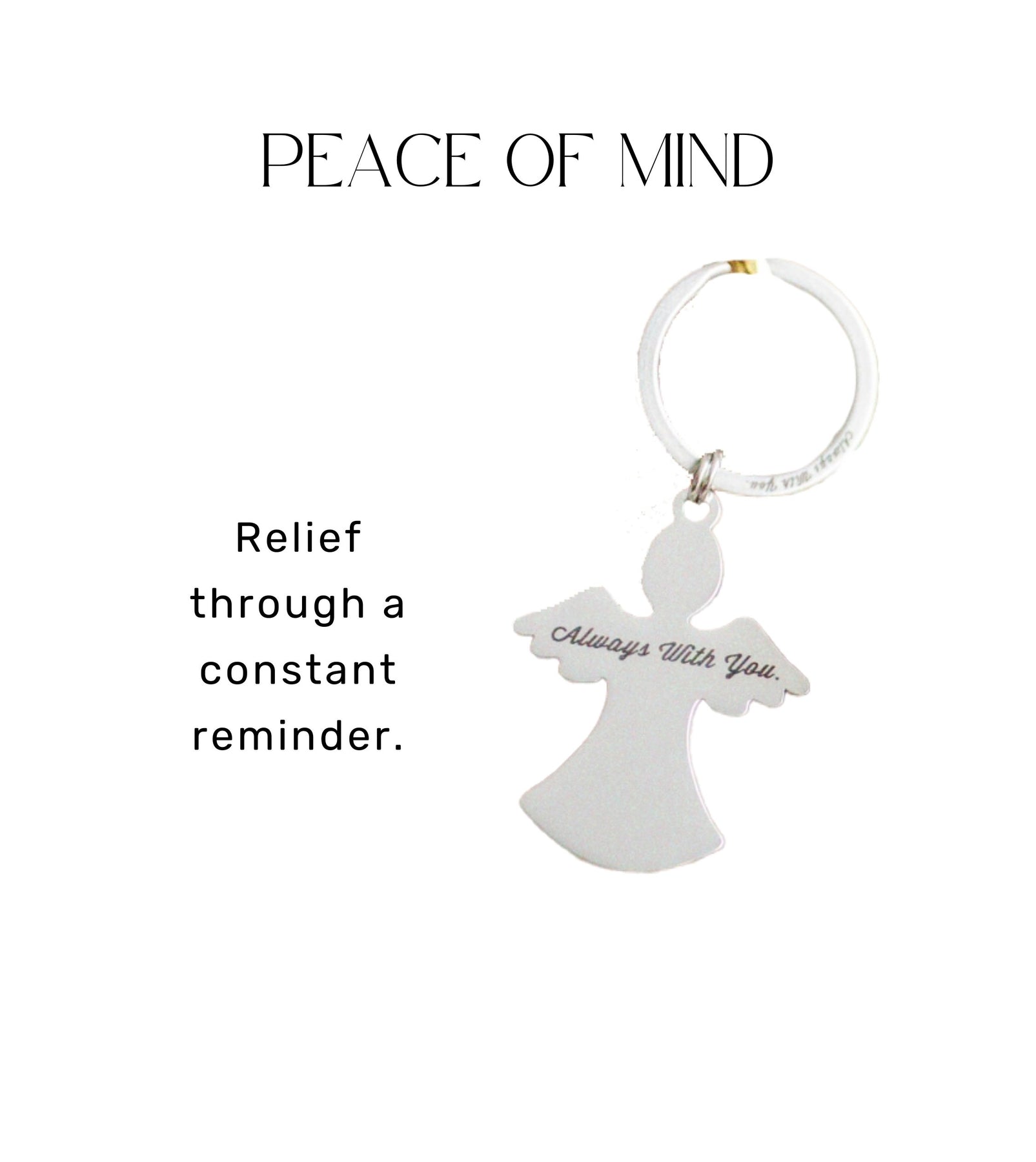
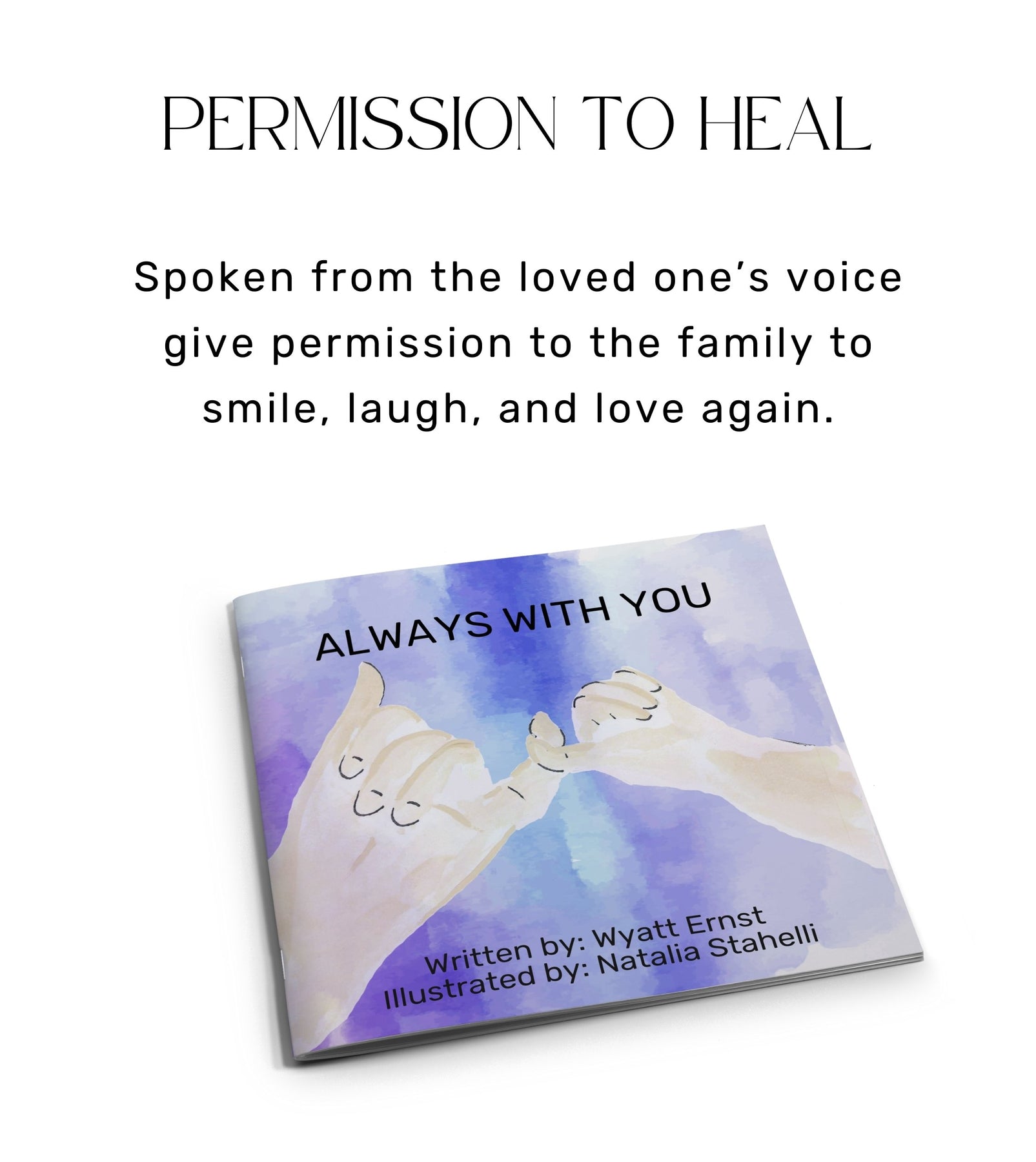
Yes, the included books 'Always With You' and 'Give Me My Apples Back' have been written to provide comfort and lessons of resilience to readers of all ages, both children and adults.
The Support Cards guide the friends of the griever on how to provide effective emotional support. It's a tool to help them transform their goodwill into healing actions.
The Grief Schedule offers daily simple tasks and affirmations, providing structure and fostering resilience during the grieving process. It serves as a gentle guide to help navigate through difficult times.
✅ $$
✅ Immediate Soothing Relief.
✅ Provides Enduring Comfort.
✅ Guides Emotional Recovery.
✅ Provides Healing Resources.
✅ Encourages Emotional Expression.
✅ Fosters Relationship Reconnection.
✅ Comprehensive Grief Healing.
✅ Enhances Friendship Bonds.

❌ $$$$$
❌ Temporary Distraction Only.
❌ Comfort Ends Shortly After Received.
❌ Doesn't Address Emotions.
❌ Lacks Healing Resources.
❌ Misses Emotional Support.
❌ No Connection Support.
❌ No Healing Approach.
❌ Friends Disappear Out of Fear.